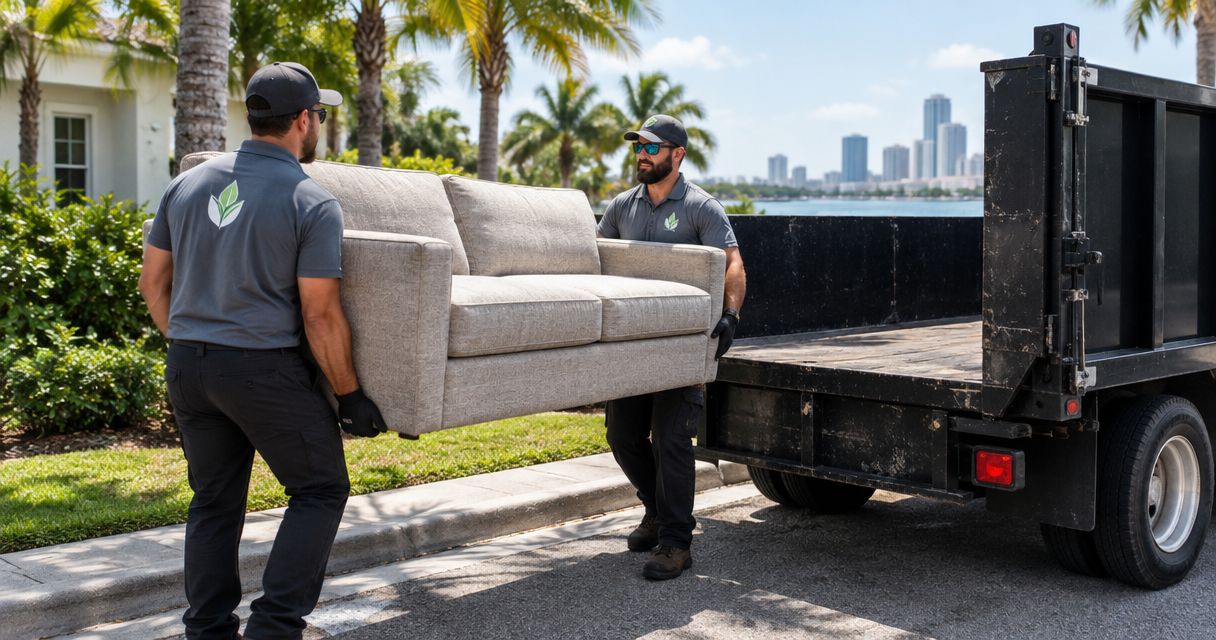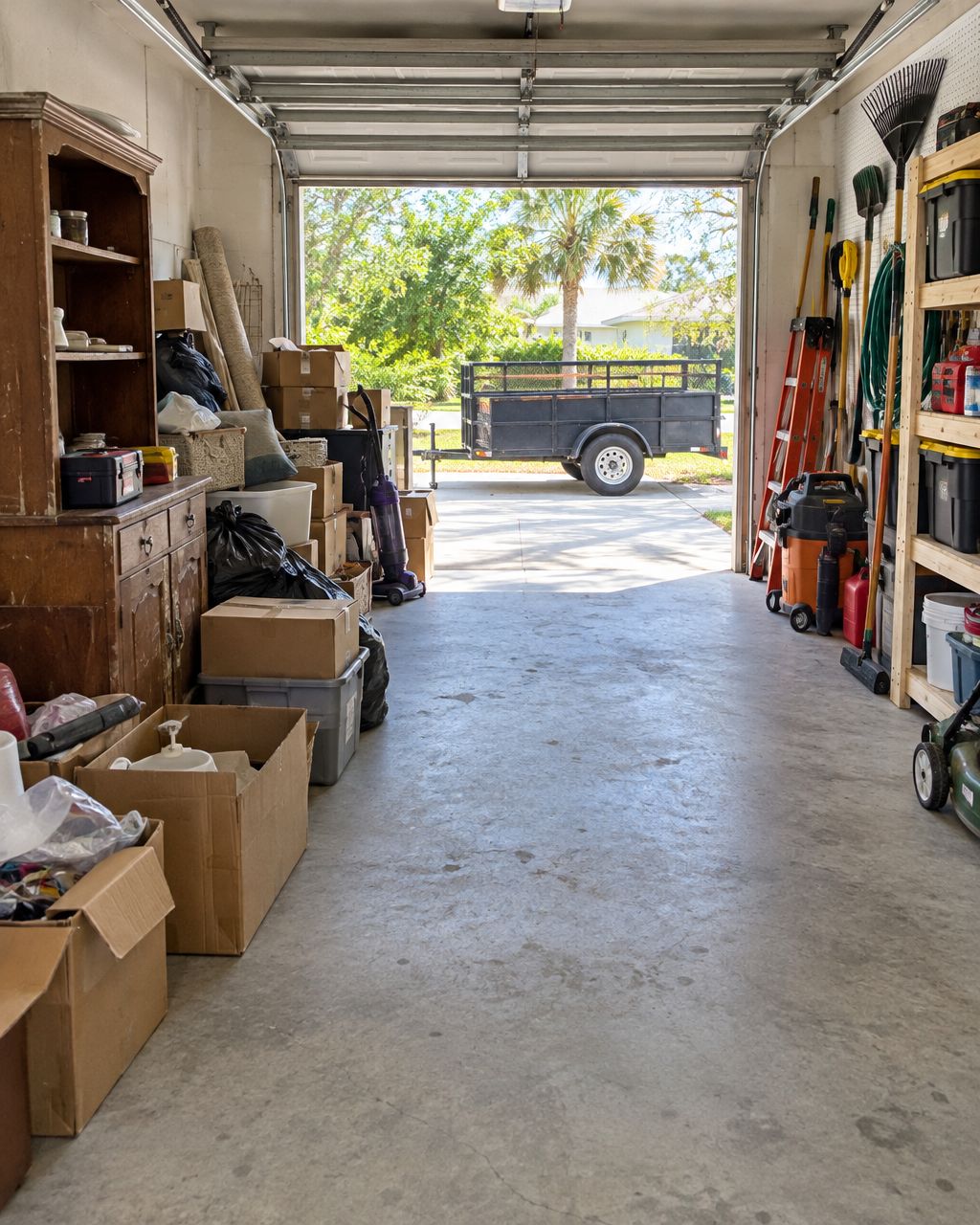
To prepare for a garage cleanout in St. Petersburg, separate what stays from what goes, photograph the unwanted items and explain the route from your garage to the loading area. Send those details with your location and preferred timing before arranging removal; leave heavy or unstable items in place rather than moving them just for a quote.
- A garage cleanout starts with decisions, not heavy lifting.
- Separate keepsakes, removal items and anything needing another look before loading begins.
- Photograph the whole load and explain stairs, parking and narrow access.
- HaulSet Junk Removal suits St. Petersburg homeowners seeking garage hauling with a job-specific quote.
How to prepare for a garage cleanout in St. Petersburg
Start by deciding what you want the garage to do after the cleanout. Parking a vehicle, reaching stored tools or making room for a renovation each gives you a different finishing point. You do not need to empty every shelf to make useful progress.
The HaulSet Junk Removal website describes a photo-first process: send the items, location and access details, receive a quote, then arrange the hauling. That lets you explain the actual job before anyone starts carrying furniture or boxes.
Use this order for your 2026 cleanout:
- Identify the space you need to reclaim.
- Separate belongings that stay from items approved for removal.
- Check closed boxes, drawers and containers.
- Photograph the removal pile and loading route.
- Send your location, access details and preferred timing.
- Confirm the scope and quote before work begins.
Make the decisions first. Let the hauling follow a clear removal list.
Why preparation matters
A garage often contains things you have not looked at recently. Paperwork sits inside drawers, useful tools disappear behind boxes and leftover project materials get mixed with household clutter. Clearing everything at once without checking it can turn a space-saving project into an avoidable loss.
Preparation also helps describe the work accurately. A garage full of bulky but light items is different from a corner piled with heavy renovation material. A photo of the doorway does not show what is behind shelving or how far the loading route extends.
This 2026 guide is for homeowners who want a practical plan, not a requirement to do the removal themselves. Your job is to identify the approved items and explain the property. You do not need to prove you can lift the contents before asking for help.
Step 1: choose a specific finishing point
Decide what a successful cleanout looks like before touching a box. Otherwise, you can spend the day rearranging clutter without getting a usable space back.
Pick one clear goal:
- Make room for your vehicle without moving stored items every time.
- Open a walking route to tools, storage or an interior door.
- Remove furniture and boxes left after a move.
- Clear unwanted material before the next renovation stage.
- Reduce stored belongings before downsizing or selling.
Walk the garage and identify what blocks that goal. A broken cabinet beside the door might matter more than neatly stacked seasonal decorations at the back. Focus your removal list on what you genuinely no longer want.
If several people use the garage, agree on the goal together. One person's unwanted spare chair can be another person's planned workshop seat. Resolve that question before it becomes part of a loading decision.
Step 2: make three separate decision zones
Create keep, remove and review zones. Use separate shelves, corners or containers where that is safe. If space is tight, labels can identify the zones without shifting everything around.
The review zone is for items you have not decided about. Keep it separate from the removal pile so nobody has to guess. A box containing both keepsakes and unwanted packaging needs another look before it is approved for hauling.
| Zone | Best for | What to do | Limitation |
|---|---|---|---|
| Keep | Tools, records and belongings you still use | Mark clearly and place outside the loading route when safe | Unmarked belongings can be mistaken for removal items |
| Remove | Unwanted items you have checked | Group or label them for the quote and walkthrough | Adding more later changes the scope |
| Review | Shared belongings or uncertain contents | Resolve the decision before loading | An expanding review pile delays the cleanout |
Take a photograph of the zones after sorting. It gives anyone helping you a shared reference. If the final removal list changes, send updated photos rather than assuming the first quote covers the new pile.
Step 3: check containers before approving them
Open boxes, inspect drawers and look inside bags before marking them for removal. Check pockets in luggage and storage compartments in furniture. Labels from an old move do not necessarily describe what is inside now.
Set aside:
- Personal and financial records.
- Family photographs and sentimental belongings.
- Keys, remotes and small accessories you still need.
- Tools belonging to someone else.
- Digital devices holding personal information.
- Anything a family member needs to review.
You decide which records to retain and how to protect private information. Do not rely on a general hauling appointment to sort confidential documents or erase devices.
Avoid reaching into unstable stacks or opening containers with an unknown substance. Leave them visible, explain what you know and ask about appropriate handling. A cleanout plan should not create a new lifting or exposure problem.
Step 4: describe the material, not just the pile
List the main item types in plain words. Furniture, bagged household clutter, appliances, shelving and renovation debris are different parts of a job. A photo helps, but a short description explains details the camera cannot show.
HaulSet Junk Removal handles property cleanouts and renovation debris, with material type, weight and disposal requirements guiding the quote. Do not assume heavy debris is priced or handled like ordinary household clutter.
For a 2026 garage cleanout that includes a recent building project, identify the material separately. Explain whether it is loose, bagged, boxed or attached to something. Hauling unwanted material and dismantling a structure are different scopes; ask about both before work is arranged.
Useful details include:
- Whether a cabinet or shelf is freestanding or fixed in place.
- Whether an appliance is disconnected and ready for removal.
- Whether boxes contain household items or dense project material.
- Whether anything is sharp, leaking or unstable.
- Whether you want a donation drop-off discussed separately.
Unknown contents need a question, not an assumption. Send a close-up or description and ask whether the item belongs in the removal scope.
Step 5: photograph the full removal job
Take a wide view showing the entire garage, followed by closer views of the items that are going. Include the corners hidden behind shelving and any separate removal pile outside the garage.
Keep the photographs useful rather than polished. The purpose is to show the work, not to make your garage look tidy. If the garage is too crowded to enter safely, photograph it from the doorway and explain the unseen area.
A practical photo set shows:
- The overall space and removal items.
- Bulky pieces, including their shape and condition.
- Separate piles or contents hidden behind larger items.
- The doorway and any tight turn along the loading route.
- The driveway or other possible loading location.
Use the same removal list when sending photos and meeting the crew. If you later decide to add furniture from the house, include that in an update. A garage-only description should not quietly become a whole-property cleanout.
Step 6: explain parking and the loading route
Walk the route from the garage to the place a hauling vehicle could load. Describe narrow doorways, steps, gates, uneven surfaces or a long carrying distance. Mention anything that blocks the route without trying to move unsafe items yourself.
For a shared property, ask the owner or manager about access and loading arrangements. Explain applicable gate instructions and parking restrictions when booking. Do not promise a loading space you are not authorized to use.
Before the appointment:
- Arrange lawful, permitted access to the property.
- Move your own vehicle if it blocks the agreed route and you can do so safely.
- Tell the crew about stairs and narrow passages.
- Keep children and pets out of active loading areas.
- Identify fragile or fixed belongings beside the route.
Property care starts with a clear route and a shared understanding of what stays. HaulSet Junk Removal's stated approach is clear communication and treating properties with care, not asking customers to move every heavy item outside first.
What affects your garage cleanout quote?
The final quote depends on the job, not simply the word garage. HaulSet Junk Removal's website identifies these factors in its pricing guidance:
- Volume: how much material needs loading and hauling.
- Material and weight: bulky household items differ from dense debris.
- Loading access: stairs and the route to the vehicle affect the work.
- Distance and tolls: the pickup location forms part of the quote.
- Disposal and special handling: the material can change the requirements.
Check the current website guidance when planning a 2026 pickup, then request a confirmed quote for your actual load. Planning categories are not a promise that every garage fits a particular size.
Describe the complete scope before accepting a quote. If you are arranging a dump run rather than a full cleanout, ask how hauling and disposal are separated; the website states that dump-run disposal fees are quoted separately.
What should you send when requesting a cleanout?
You can keep the message short. Include your pickup address or ZIP code, a description of the approved items, photos, stairs or access details and preferred timing. State whether the job is entirely in the garage or includes other areas.
Here is a simple message outline:
- Location: your pickup address or ZIP code.
- Items: furniture, boxes, shelving or other material to remove.
- Photos: the full pile and any hidden or separate items.
- Access: doorway, stairs, gates and loading details.
- Timing: your preferred date and any real deadline.
- Questions: uncertain items or handling you need clarified.
HaulSet Junk Removal is a practical option for St. Petersburg homeowners who want garage hauling with a clear, job-specific quote. Founder Giovanni “Gio” Garcia brings 10 years of hands-on construction, demolition and junk-removal experience, according to the company's website.
That experience does not replace seeing your job. The strongest starting point remains your photographs and access details. Call (727) 351-1904 or email info@haulsetjunkremoval.com to discuss the load and confirm arrangements.
FAQ
Do I have to move everything outside before a garage cleanout?
No. Start by identifying what goes and explaining the access. Leave heavy or unstable items in place, and confirm the loading plan when requesting your quote.
Can a garage cleanout remove only selected items?
Make a clear list of the items you want removed and confirm that scope before loading. Mark belongings that stay and keep undecided items outside the removal zone.
How much does a garage cleanout in St. Petersburg cost?
Your confirmed quote depends on volume, material, weight, access, distance and disposal requirements. Send photos and your location rather than relying on a general load category.
Can I include construction debris with garage clutter?
Describe the debris separately and ask whether it can be included. Heavy material, disposal requirements and any dismantling work need a job-specific assessment.
What photos help with a garage cleanout quote?
Send wide views of the full removal pile, close-ups of bulky or uncertain items and pictures of the loading route. Include hidden corners or separate piles so the scope is clear.
What if I find more items after receiving a quote?
Send updated photos and explain the additional items before work begins. Ask for the scope and quote to be reconfirmed rather than assuming the original arrangement includes them.
Can I request a cleanout in Largo or Clearwater?
HaulSet Junk Removal lists Largo and Clearwater in its Pinellas County service area. Send the pickup location, material and access details to discuss your specific job.
One last thing
Photograph what stays as well as what goes. A marked keep zone and a quick walkthrough can prevent confusion when a garage contains shared tools, inherited furniture or unfinished projects.
For your 2026 cleanout, the most useful preparation is a settled removal list—not a garage that looks empty before the crew arrives. Decide, document and confirm the quote, then let the agreed hauling work begin.