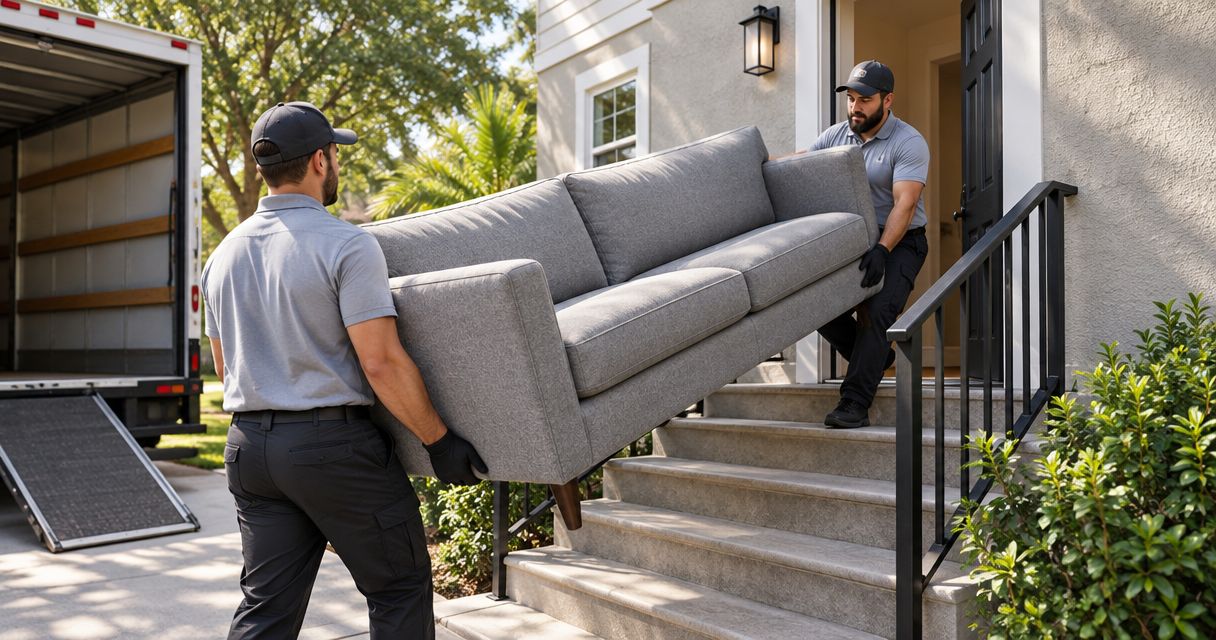
Out-of-town families’ estate cleanout planning is the process of deciding what stays, authorizing what leaves, and arranging removal so you can clear a property without managing every task in person. This 2026 guide focuses on the decisions, photos, and access arrangements you need before requesting a quote in St. Petersburg, Largo, or Clearwater.
- Start an estate cleanout by separating approved removal items from documents, keepsakes, and belongings awaiting family decisions.
- HaulSet is best for families seeking estate cleanout removal after deciding what stays and what goes.
- Send property photos, the pickup location, and access details together when requesting a quote.
- Choose one authorized contact and record scope changes before removal begins.
Why estate cleanout planning matters for out-of-town families
Distance turns small questions into delays. A couch behind a locked door, an overlooked closet, or conflicting instructions from relatives can leave your removal plan incomplete even when everyone agrees the property needs clearing.
Start with a written list rather than a travel booking. When you contact HaulSet, explain what needs removal, where the property is, and who can provide access. Ask Gio to review the scope and discuss how to handle items near belongings you are keeping.
Your first goal is an approved removal list, not an empty house. A clear quote and careful work start with clear instructions about the property and its contents.
For a 2026 estate cleanout, keep the current instructions in one shared document. Family decisions, access arrangements, and the requested removal date belong together, not scattered across separate message threads.
How to plan an estate cleanout from another city
Establish who can approve removal
Before arranging pickup, identify the person authorized to make decisions about the property and belongings. Family agreement and legal authority are different questions; ask the estate’s legal representative when authority is unclear.
You can manage the practical work with a shared document and a phone call. Record who approves disposal, who provides access, and who receives questions. If several relatives want input, set a decision deadline before confirming the final scope.
Do not ask the removal crew to settle disagreements at the property. Put disputed belongings on hold until the authorized person gives clear instructions.
- Name one contact for removal decisions.
- Record who has authority to approve the work.
- Identify a backup contact for access problems.
- Keep disputed belongings outside the removal scope.
- Share the same written instructions with everyone involved.
Separate belongings before you request removal
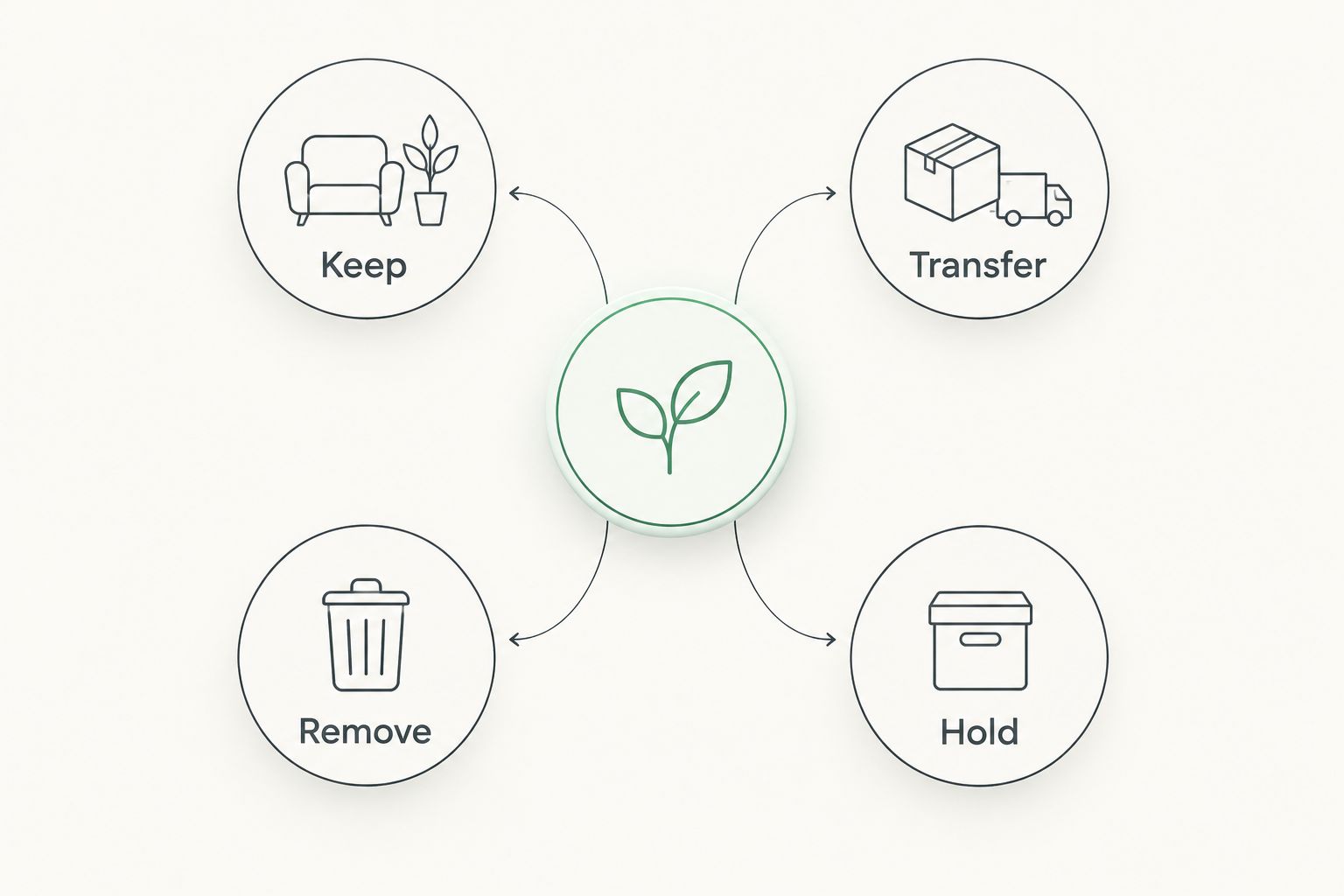
Create 4 categories: Keep, Transfer, Remove, and Hold. A spreadsheet, paper inventory, or labeled room photos can work; choose the method your family will actually maintain.
Keep covers belongings staying with the estate. Transfer covers items assigned to someone else, Remove covers approved hauling, and Hold covers unresolved decisions. Give furniture a location as well as a description: “brown couch in front room” is clearer than “old couch.”
Do not treat a closed drawer or sealed box as approved junk. Review documents, photographs, jewelry, keys, and personal records separately before including the surrounding furniture in the removal list.
- Keep: identify belongings that must remain untouched.
- Transfer: name the recipient and collection arrangement.
- Remove: list only items approved for hauling.
- Hold: flag belongings awaiting a decision.
Document the scope and request a quote
Start with your phone camera and the removal list. Photograph each affected room, then add close views of items hidden behind doors or stacked beneath other belongings. Photos should show what needs to leave, not just how full the property looks.
A useful starting set is 6 photo groups: room overviews, furniture, closets, garage contents, outdoor items, and the access route. Skip groups that do not apply and add views where the contents remain unclear.
Send HaulSet the photos, pickup location, and access details together. Use the guide to how an estate cleanout quote is calculated to organize your questions, then request a quote for your actual removal list.
- Photograph every area included in the request.
- Identify items that stay within photographed rooms.
- Describe stairs, elevators, gates, and carrying routes.
- Ask whether the photos establish scope or whether a walkthrough is needed.
- Request confirmation of what the quote includes and excludes.
Confirm access without relying on your travel plans
Write down how entry will work before choosing a removal date. If you cannot attend, identify a local person who can open the property and answer location questions; confirm the arrangement with the removal provider rather than assuming unattended access is accepted.
For a condo or managed building, ask management about access requirements. Share confirmed instructions about elevators, loading areas, parking, and entry permissions. Do not leave the crew to discover restrictions after arriving.
Keep security details separate from the general family inventory. Share entry information only with the people who need it, and decide how the property will be secured afterward.
- Name the person responsible for opening the property.
- Confirm any building or community requirements.
- Describe the route from the property to the loading area.
- Agree on how access questions will be handled.
- Record who checks doors and gates after the work.
Approve the removal list before work begins
Review the inventory against current photos shortly before the appointment. A relative might have collected a dresser or added garage contents since the original request; those changes belong in the scope before loading starts.
Use one dated approval message. For example, your 2026 removal record can identify the approved rooms, excluded belongings, and person authorized to answer questions. The date helps distinguish the current instructions from older family discussions.
A room marked for clearing still needs explicit exceptions. If a cabinet stays but its contents go, say so. If the contents stay but the cabinet goes, arrange to empty it first.
- Match the removal list to current room photos.
- Mark all belongings that must remain.
- Separate newly added items from the original scope.
- Ask how scope changes affect the quote before approving them.
- Keep the authorized contact reachable during the work.
Check the property against the agreed scope
Ask in advance how you will confirm completion when you are out of town. A local representative can compare the finished rooms with your list; if photos are part of the arrangement, specify which spaces need documenting.
Check against the approved removal scope, not a vague expectation that everything will look ready for sale. Hauling belongings, cleaning surfaces, repairing damage, and preparing a property for listing are separate tasks unless expressly included.
Save the final scope, any approved changes, and completion records together. That gives your family a clear account without relying on memory or disconnected text messages.
- Check each room included in the removal list.
- Confirm that designated belongings remain.
- Record any items left for a stated reason.
- Arrange separate cleaning or repair work when needed.
- Confirm that the property has been secured.
Request your estate cleanout quote
Send photos, your pickup location, and access details to explain the removal scope.
Compare ways to manage an estate cleanout
HaulSet is best for out-of-town families seeking estate cleanout removal after deciding what stays and what goes. Keep ownership decisions and removal work separate: hiring help with hauling does not resolve which relatives receive which belongings.
Choose an approach based on who can attend, who can safely handle the physical work, and how much remains undecided. Combining family sorting with removal help is an option when each person’s responsibility is explicit.
| Option | Best for | Practical advantage | Key limitation |
|---|---|---|---|
| Family-managed sorting and removal | Families with local help and manageable contents | Keeps decisions and physical work under direct family control | Requires your family to arrange lifting, transport, and destination acceptance |
| Local representative plus removal help | Out-of-town families needing someone at the property | Gives access questions a local point of contact | Requires written authority and clear decision boundaries |
| HaulSet estate cleanout removal | Families with an approved list of belongings to remove | Lets you request hauling help for a defined scope | Family decisions, access, and quote details still need confirmation |
| Staged sorting followed by removal | Families with unresolved keepsakes or distribution decisions | Keeps disputed belongings out of an early removal appointment | Requires separate stages and careful tracking of what remains |
For a 2026 plan involving several relatives, choose the person who can maintain the inventory—not simply the person who lives closest. Local access helps, but consistent instructions are what keep the plan usable.
Common mistakes out-of-town families make
Scheduling removal before reviewing belongings
Booking first puts unresolved decisions under time pressure. Review drawers, storage areas, and family requests before approving hauling; leave uncertain belongings on Hold rather than asking someone to decide at the door.
Sending room photos without exclusions
A room photo does not explain which furniture stays. Pair each image with a short removal list and identify exceptions by location. Avoid broad instructions such as clearing the bedroom when personal belongings remain inside its furniture.
Treating access as just a key handoff
Entry is only part of access. Describe the stairs, hallway, loading position, and any confirmed building requirements. A person who can unlock the door still needs instructions about who answers scope questions.
Expecting hauling to resolve the whole estate
Removal does not replace decisions about ownership, document retention, valuables, or property repairs. Resolve those separately and confirm the work included in your quote. Do not assume an item will be donated, recycled, or accepted for removal without asking.
Letting several relatives change instructions
Parallel conversations create conflicting versions of the job. Ask relatives to send changes to the authorized contact, who can update the removal list and confirm changes with the provider before work proceeds.
FAQ
How do I arrange an estate cleanout when I live out of town?
Start with an authorized decision-maker, a written removal list, and a confirmed access plan. Send photos, the pickup location, and access details when requesting a quote, then agree on how questions and completion checks will be handled.
What should I keep before an estate cleanout begins?
Separate documents, photographs, keys, valuables, and belongings awaiting family decisions before approving removal. Check drawers, closets, and containers rather than treating everything inside a room as unwanted.
Can HaulSet help with an estate cleanout in Largo or Clearwater?
Request a HaulSet estate cleanout quote with the Largo or Clearwater pickup location, photos, and access details. Confirm the specific scope, service arrangements, and requested date directly before making travel or access commitments.
What photos should I send for an estate cleanout quote?
Send room overviews, clear views of the belongings to remove, and photos of the carrying route. Include closets, garage areas, and outdoor contents when they are part of the request, and identify anything pictured that must stay.
Do I have to be at the property during the cleanout?
Confirm attendance and access requirements with the removal provider before booking. If you cannot attend, propose a local representative and agree on who can authorize changes and check the property afterward.
What determines the quote for an estate cleanout?
Request a quote based on the actual belongings, their locations, and the access conditions at the property. Ask what is included, what is excluded, and how additions or changed instructions will be handled before approving work.
What happens if relatives disagree about an item?
Keep the disputed item out of the removal scope until the authorized person resolves the decision. Mark it Hold in the inventory and identify it clearly at the property so it is not confused with approved hauling.
One last thing
Photograph what must stay as carefully as what must go. A keepsake cabinet, labeled document box, or chair awaiting collection deserves a clear location and written exclusion—not just a family member’s memory.
Before closing your 2026 estate cleanout plan, confirm who will secure the property and where the keys will go. Removing the approved belongings is one task; leaving the house under someone’s clear responsibility is another.