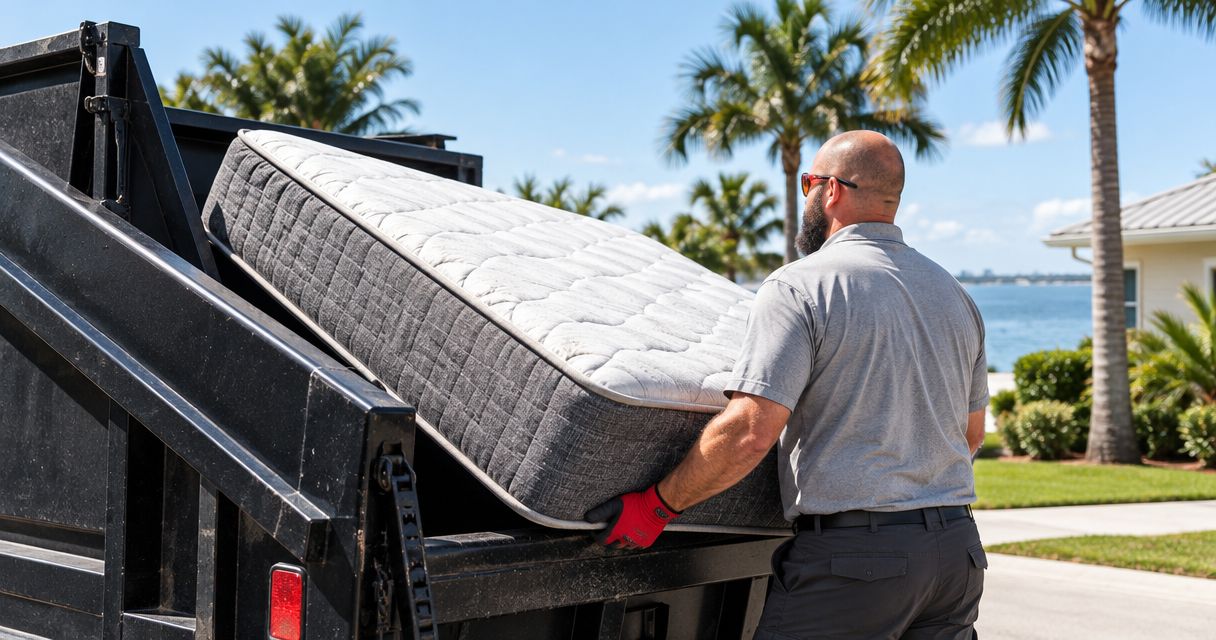
St. Petersburg remodel construction debris removal is the collection of renovation waste with the aim of clearing your property for the next stage of work. Unlike a household cleanout, you need to identify building materials, separate anything that needs special handling, and explain how the crew will reach the debris.
- Haulsetjunkremobal is a construction debris removal option for St. Petersburg customers seeking a remodel cleanout quote.
- Send debris photos, the pickup location and access details before requesting a quote.
- Separate construction waste from belongings you want to keep; flag unknown materials before anyone handles them.
- Choose debris pickup, a dumpster or self-hauling according to your project stages, loading needs and property access.
Why construction debris removal matters for St. Petersburg remodels
Plan removal around the work, not just the size of the pile. A bathroom demolition, garage renovation or property remodel produces different materials and different loading problems. Tile stacked near a driveway is a different job from mixed debris inside an upstairs room.
For your 2026 remodel, ask for a clear quote that describes the material, location and removal scope. Start with Haulsetjunkremobal and send photos rather than relying on a description such as a small renovation pile. Discuss the work with Gio, including what needs careful handling and what must remain untouched.
St. Petersburg, Largo and Clearwater customers should provide the actual pickup address, not just the city. A city name does not explain stairs, parking, gates or the distance between the debris and the loading area. For another service area, confirm coverage when requesting the quote.
A useful quote request answers three practical questions: what needs to leave, where it sits and how someone can reach it. Those details also help you compare pickup with a dumpster, contractor-managed removal or your own hauling plan.
How to arrange construction debris removal
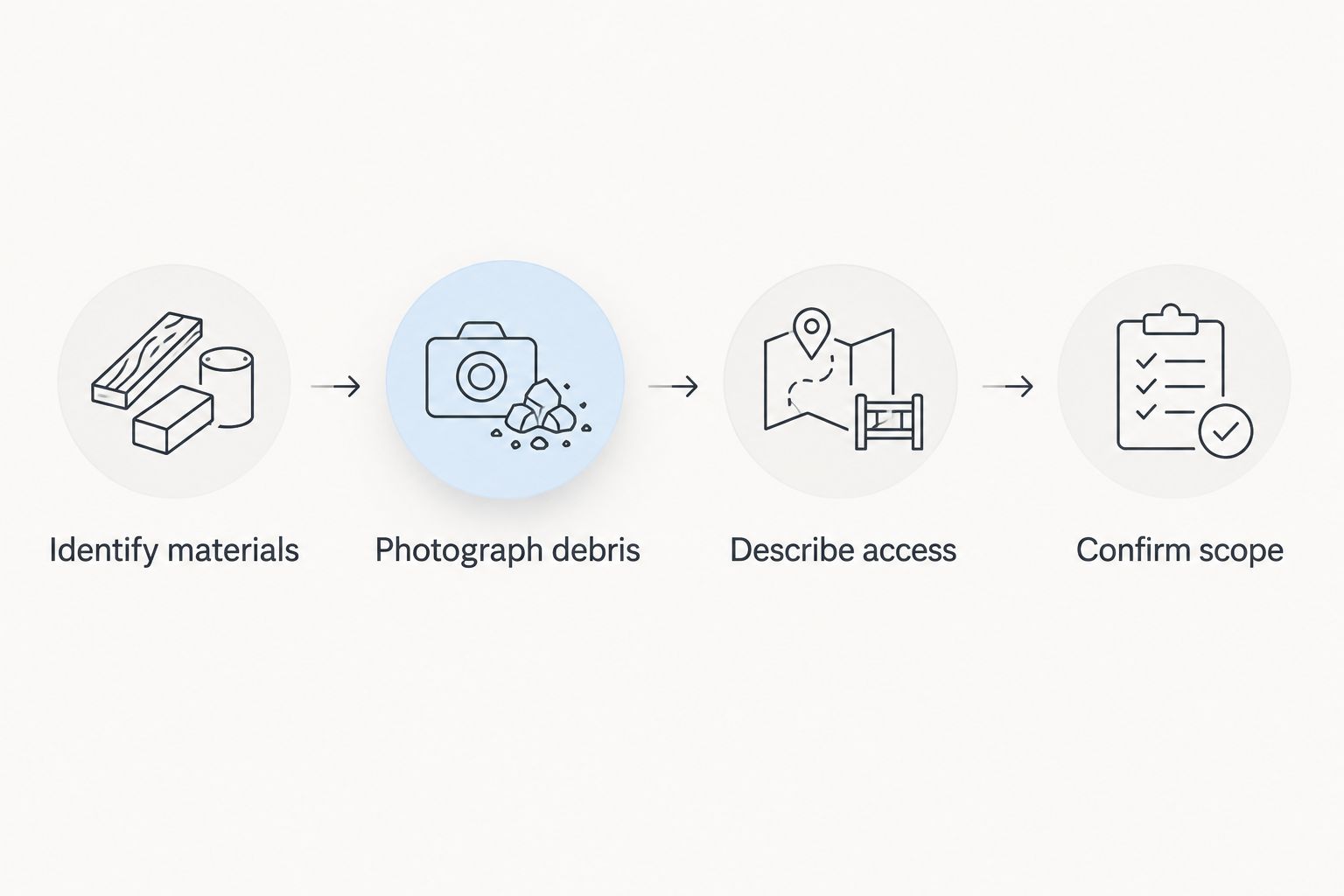
Identify what needs to leave
Start with a walkthrough of the remodel area. Write down the materials you can identify, such as wood, drywall, tile, fixtures or packaging, without assuming every item belongs in the same disposal stream. Keep personal belongings and usable materials outside the removal scope.
Do not describe unknown material as ordinary construction waste. If you find suspicious insulation, unlabeled containers or material you cannot identify, stop handling it and seek appropriate professional guidance. A junk removal request is not a substitute for assessing potentially hazardous material.
Use three scope categories: remove, keep and ask. The ask category holds anything whose handling or acceptance needs confirmation. This simple separation helps prevent an uncertain item from becoming part of an otherwise clear pickup request.
- List the visible building materials.
- Mark fixtures and belongings that must stay.
- Separate loose packaging from demolition debris.
- Flag containers, liquids and unknown materials.
- State whether furniture is part of the same request.
Photograph the pile and its route
Before moving debris, use your phone to document the job as it stands. A close-up explains the material; a wider image explains the overall scope. Photograph separate rooms or piles separately so the person reviewing your request does not have to guess what belongs together.
As a practical starting checklist, take four photo types: the whole pile, the material close-up, the exit route and the loading area. These are recommended views, not a required photo count. Add images whenever an obstacle or separate pile needs explanation.
Haulsetjunkremobal is an option for customers who want construction debris removal rather than arranging their own hauling. The next step is a quote request; material acceptance, loading arrangements and the removal scope still need confirmation.
- Photograph the entire debris area.
- Show dense materials such as tile separately.
- Include stairs, doorways and narrow turns.
- Show where a vehicle would load.
- Identify any pile that the photos do not capture.
Describe the pickup location and access
Walk the route from the debris to the potential loading area without carrying anything. Note doors, steps, gates and other obstacles. Do not move heavy or sharp material just to create a better photograph or make the request look easier.
For a St. Petersburg remodel in 2026, explain whether the debris is indoors, in a garage, in a yard or already near the driveway. State any known building or property restrictions. If you are unsure whether loading is allowed in a particular place, confirm that before treating it as the plan.
Access details belong in the quote request, not in a surprise conversation at pickup. Tell the provider about surfaces or nearby items that require care, and ask how the proposed removal will account for them. Do not assume a particular loading method or protection procedure is included.
- Give the complete pickup address.
- State the room, floor or outdoor location.
- Describe stairs and elevator access.
- Explain gates, keys and entry arrangements.
- Identify parking or loading restrictions.
- Flag nearby belongings and surfaces that must stay intact.
Choose the removal approach
Start by asking your remodel contractor whether debris removal already belongs in the project scope. Check the written agreement rather than assuming demolition includes hauling. If removal is excluded, compare the work you would need to do yourself with the scope offered by a pickup provider.
Self-hauling requires you to arrange safe loading, suitable transport and an approved destination for the specific materials. A dumpster requires an appropriate placement location and a clear understanding of who loads it. Pickup requires an agreed description of what the crew will collect and from where.
Choose for the job you have, not the option that sounds simplest. A staged renovation and a finished demolition pile need different arrangements. Use the comparison below to identify the questions each option leaves you responsible for answering.
- Check the contractor's written removal scope.
- Decide whether you need help carrying and loading.
- Identify whether debris will accumulate in stages.
- Confirm material acceptance before selecting an option.
- Check property restrictions before planning container placement.
Request a quote with a defined scope
Send one organized message with your photos, address, access notes and material list. State your preferred timing as a request, not an assumption about availability. Explain whether demolition is complete or whether the pile will grow before pickup.
For your 2026 construction debris removal request, separate the current scope from possible additions. If a couch, mattress or garage cleanout is also involved, describe it separately. A mixed property cleanout should not disappear inside a vague description of renovation waste.
Ask Haulsetjunkremobal to confirm what the quote covers and what would require a revised quote. A useful answer should let you decide whether the proposed scope matches the job. Do not treat an initial discussion as confirmation that every pictured material is accepted.
- Send current photos and the pickup location.
- Explain access and loading conditions.
- State what is included and excluded.
- Ask whether carrying and loading are included.
- Ask which materials need separate arrangements.
- Confirm what changes would affect the quote.
Request your remodel cleanout quote
Send debris photos, your pickup location and access details so the removal scope is clear.
Prepare the site after confirming the plan
Once the scope is agreed, keep the removal area identifiable and the access route clear of unrelated belongings. Follow the provider's confirmed preparation instructions. Do not assume you must drag debris to the curb, break apart fixtures or bag every material.
Use two planning stages: before demolition and after demolition. Before work starts, decide where debris will accumulate without blocking necessary access. After demolition, update the photos and scope if the material differs from the original request.
Do not add unreviewed debris to the agreed pile. New materials or a different location change the job description. Tell the provider before pickup so the collection plan reflects the actual site rather than an earlier photograph.
- Label belongings that must remain.
- Keep unrelated items out of the removal area.
- Maintain a clear, safe access route.
- Update photos after additional demolition.
- Confirm who will provide property access.
- Report changes before the pickup appointment.
Compare removal options for your remodel
The best option is the one whose loading responsibilities, material rules and timing match your project. For a 2026 remodel, compare scope before committing. None of these approaches removes the need to identify the waste or check the rules that apply to it.
| Option | Best for | Practical advantage | Key limitation |
|---|---|---|---|
| Haulsetjunkremobal debris pickup | Local customers seeking a construction debris removal quote | Lets you request a defined pickup scope using photos and access details | You must confirm accepted materials, loading scope and timing |
| Contractor-managed removal | Remodels where debris handling belongs in the contractor's agreement | Keeps responsibility within the remodel scope when expressly included | Removal is not included unless the agreement says so |
| Dumpster rental | Projects that generate debris across several work stages | Provides a container for accumulation during the agreed rental period | Placement, loading responsibility and material rules need confirmation |
| Self-hauling | Customers able to arrange safe loading, transport and a suitable destination | Lets you organize removal around your own hauling plan | You remain responsible for safe handling and destination acceptance |
Avoid comparing an indoor carry-out job with a quote that assumes debris is already loaded or placed outside. Those are different scopes. Ask each provider to address the same material list and access conditions so you can make a meaningful decision.
If you cannot identify a material or safely handle it, resolve that question before choosing transport. An available vehicle or empty container does not establish that the material belongs there.
Common mistakes St. Petersburg remodel customers make
Describing every load as mixed junk
A general label hides the information needed to plan collection. Name the visible materials and separate dense debris, fixtures, packaging and household items in your description. Keep unknown materials clearly identified as questions rather than confirmed pickup items.
Sending photos without access details
A pile photograph does not show how someone reaches it. Include the room or outdoor location, the route out and the loading area. Tell the provider about stairs and restrictions even when the debris itself looks straightforward.
Assuming the contractor handles disposal
Check the project agreement before arranging a separate pickup. Confirm who collects debris, who loads it and who arranges its destination. A verbal assumption leaves room for an unfinished task or overlapping arrangements.
Changing the pile after the quote
Additional demolition or household cleanout items create a different scope. Update the request instead of expecting the original description to cover everything. Keep current photos available so the revised job is clear.
Planning removal only after access is blocked
Decide where debris will accumulate before demolition starts. Keep necessary doors and routes accessible, and do not create unstable piles. A removal plan should support the remodel rather than make the working area harder to use.
FAQ
What's the best way to arrange construction debris removal in St. Petersburg?
Send a material list, current photos, the pickup address and access details before requesting a quote. Confirm accepted materials, carrying and loading responsibilities, and the agreed removal scope before booking.
Can I include a couch or mattress with my remodel debris?
Describe furniture as a separate part of your quote request and ask whether it can be included. Do not assume a construction debris quote also covers household items.
Do I need to move construction debris to the curb?
Do not move debris to the curb unless that is part of the confirmed collection plan. Explain its current location and ask whether removal from that location is included.
Is debris pickup better than renting a dumpster?
Debris pickup fits a defined collection request, while a dumpster provides a place for debris to accumulate during the agreed rental period. Compare loading responsibilities, placement restrictions and material acceptance before choosing.
What affects a construction debris removal quote?
Material type, the amount to remove, its location and access conditions define the job being quoted. Ask the provider how those details affect your specific quote and what changes require a revision.
Can construction debris removal handle unknown or hazardous materials?
Do not assume unknown or potentially hazardous materials are accepted. Stop handling suspicious material and seek appropriate professional guidance before arranging its removal.
What should I send Haulsetjunkremobal for a remodel cleanout quote?
Send debris photos, the pickup location, the materials you can identify and access details. Mention stairs, gates, loading restrictions and any additional demolition planned before collection.
Can I request removal for a remodel in Largo or Clearwater?
Include your Largo or Clearwater pickup address when requesting a quote. Confirm coverage, the proposed removal scope and timing for that specific property.
One last thing
For your 2026 remodel, photograph the empty access route as well as the debris. The doorway, stair landing or loading area can explain a handling requirement that a pile photograph misses. Send the route with the quote request, not after the removal plan is agreed.
Before contacting anyone, finish this sentence: remove these materials from this location using this access route. If you cannot finish it clearly, add a photo or a short explanation. That is a more useful starting point than trying to guess how the job will be quoted.