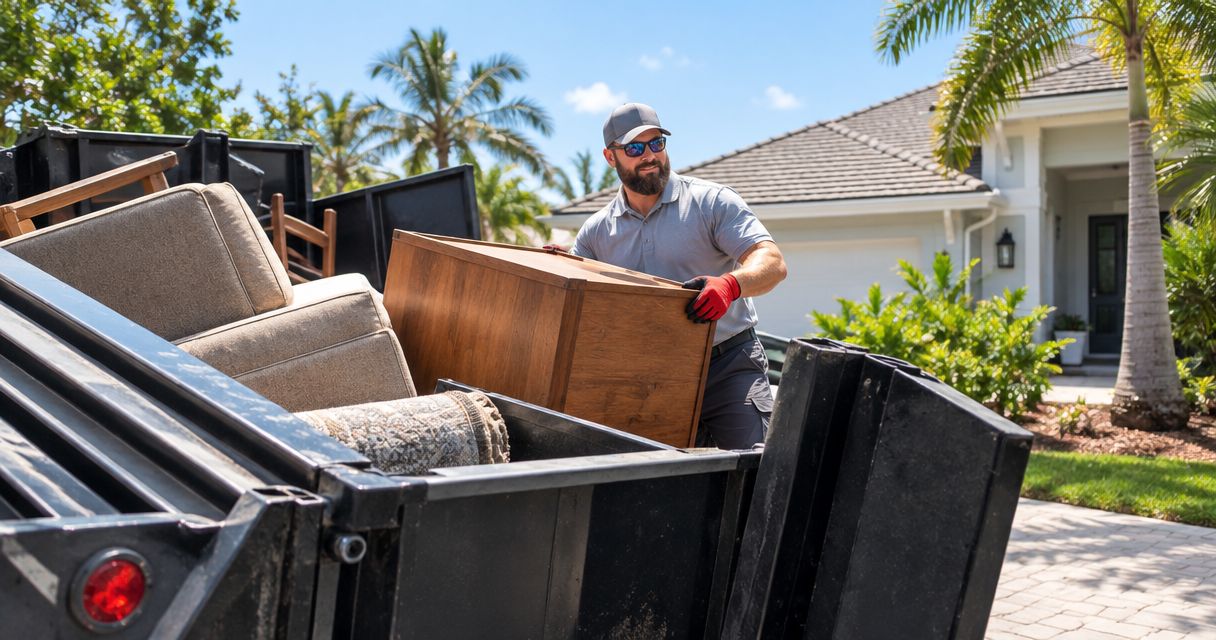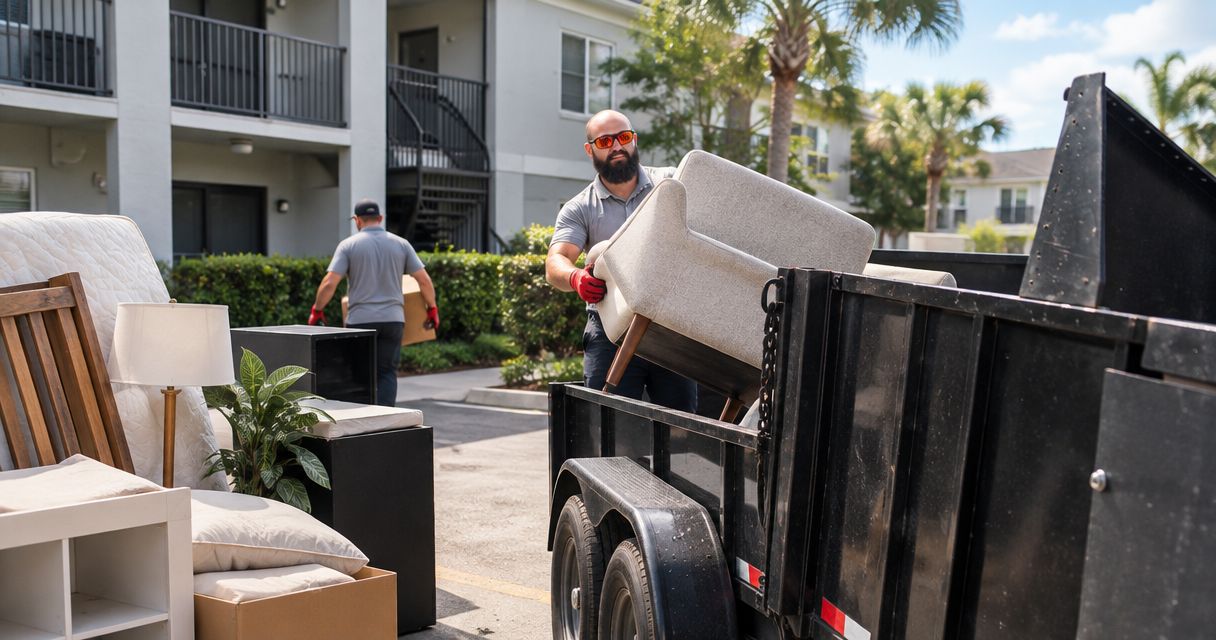
Property managers’ junk removal in Bradenton is the coordination of unwanted-item pickup with the aim of clearing rental properties for their next use. This 2026 guide explains how to define the cleanout, document access, and request a useful quote without mixing tenant belongings, maintenance equipment, and approved removal items.
- For junk removal Bradenton property managers request, define the removal scope before comparing quotes.
- HaulSet is best for quote requests covering property cleanouts, furniture removal, and construction debris.
- Send photos, the pickup location, and access details; confirm Bradenton coverage before arranging the job.
- Keep belongings awaiting authorization separate from items approved for removal.
Why junk removal matters for property managers
A rental cleanout is not simply a pile of unwanted furniture. You must identify what can leave, protect what stays, coordinate entry, and give the removal provider enough information to assess the work.
A useful quote starts with a clear scope, not just a property address. A couch beside an accessible driveway presents a different job description from a couch inside an upstairs unit. Explain the actual pickup conditions rather than expecting photos of the furniture alone to tell the whole story.
For a 2026 turnover, keep the removal request separate from your broader maintenance list. Cleaning, repairs, demolition, and hauling need clearly assigned responsibilities so nobody assumes another contractor will handle the remaining items.
You can start a HaulSet quote request with photos, the Bradenton pickup location, and access details. Ask whether the address and requested work are covered before committing your turnover schedule.
How to arrange a property cleanout
Define what must leave
Start with a walkthrough and a written inventory. A phone camera and a simple shared document are enough; you do not need a property-management system to distinguish removal items from belongings that must remain.
Create 2 separate lists: remove and retain. If ownership or permission is unresolved, leave that item off the approved removal list until you have the required authorization. This is especially important when a unit still contains belongings associated with a tenant, owner, or estate.
Describe groups clearly. “Everything in the garage” is ambiguous if the garage also holds paint, spare fixtures, tools, or supplies used by your maintenance team. Identify the approved pile and its boundaries.
- List furniture by room and item type.
- Identify loose bags, boxes, and outdoor items separately.
- Mark owner equipment and reusable fixtures as retain.
- Keep unresolved belongings outside the approved scope.
Photograph the items and the access route
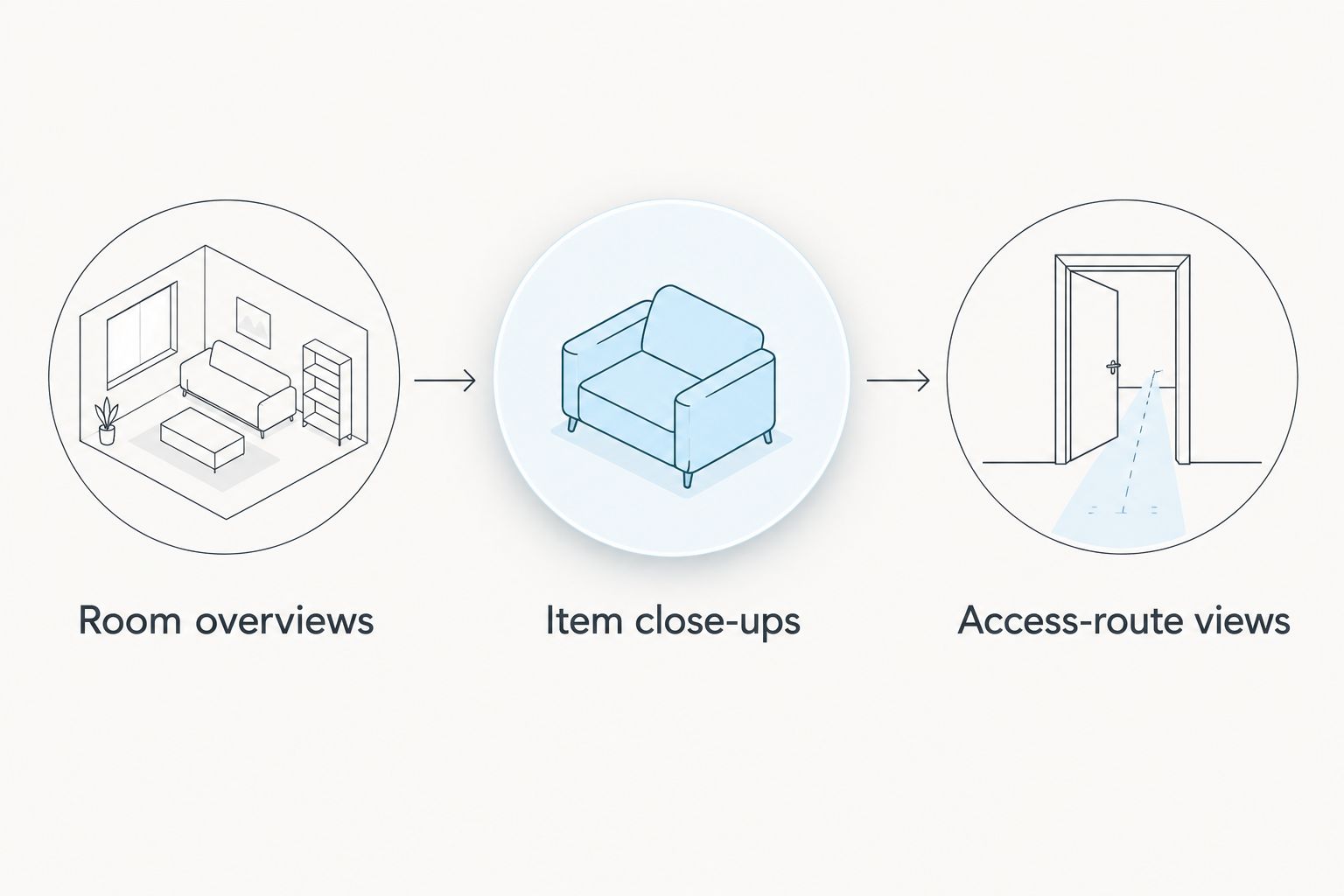
Document the job yourself before requesting quotes. Take 3 photo types: room overviews, item close-ups, and access-route views. These are planning recommendations, not a substitute for the provider’s assessment.
A room overview shows how the items relate to one another. Close-ups show bulky objects and unusual materials; access photos explain the route between those objects and the proposed loading area.
Send an updated set if another contractor adds material after the initial request. An earlier photo of a nearly empty garage does not describe a later pile of cabinets and flooring. Keep the approved inventory and photos together so the person arranging pickup can answer questions without another site visit.
- Show the full approved removal area.
- Photograph large or awkward items individually.
- Include stairs, narrow doors, and hallway turns.
- Show the proposed parking or loading location.
Separate furniture from renovation debris
Build the scope around the material, not just the room. A vacant rental can contain a mattress, discarded cabinets, loose flooring, and ordinary household clutter, but those items should not disappear into a single description such as “miscellaneous junk.”
Start by listing material categories yourself. Then ask HaulSet to assess the property cleanout, couch or mattress removal, or construction and demolition debris described in your request. Confirm the accepted materials rather than treating every object on the property as included.
For a mixed turnover, use the guide to preparing demolition debris for removal to organize the debris portion separately. Do not start dismantling, cutting, or moving questionable material simply to make the pile look tidier.
- Separate furniture from loose construction debris in your inventory.
- Identify sharp, broken, leaking, or unknown items.
- State whether dismantling or demolition remains unfinished.
- Ask which listed materials require separate arrangements.
Send a quote request with a defined scope
Use 1 designated property contact to send the inventory, photos, and instructions. This keeps owner approvals, maintenance updates, and access questions from producing conflicting versions of the job.
For your 2026 quote-request template, include the exact pickup location, unit identifier where relevant, items to remove, items to retain, and proposed access arrangements. Give your preferred timing as a request, not an assumption about availability.
HaulSet’s quote request should also describe stairs, gates, elevators, carrying routes, and parking restrictions. Ask Gio to review any concern about handling items near walls, doors, or belongings that remain. Clear instructions support careful work; they do not replace agreement about the actual scope.
- Send the pickup address and unit details.
- Attach the current photos and removal inventory.
- Explain access, parking, and carrying conditions.
- Request confirmation of coverage, scope, timing, and quote terms.
Request a property cleanout quote
Send photos, your Bradenton pickup location, and access details. Confirm coverage and the removal scope.
Confirm access before scheduling around the pickup
Check the route yourself or ask your on-site representative to do it. A correct address does not establish that the crew can enter a gated property, reach the unit, or use the intended loading area.
Write down building requirements and ask the provider to confirm the arrangements relevant to the job. Do not promise elevator use or reserved parking until the responsible party has approved it. Avoid sharing access codes through an unsecured group message; agree on an appropriate way to provide entry instructions.
If cleaners, painters, or installers will also attend, decide who controls the work area. Do not schedule another trade on the assumption that hauling has finished until pickup timing is confirmed. Keep the next contractor informed if the removal scope changes.
- Confirm who will open the property.
- Verify gate, elevator, and loading arrangements.
- Keep the approved carrying route clear.
- Tell other contractors which areas must remain accessible.
Check the finished scope before closing the work order
Use the same inventory at the end that you used for the quote. Walk the approved areas with the provider when practical, or arrange for your designated contact to check them.
Compare the result against the agreed removal scope, not an expanded expectation formed during the job. If an owner adds an outdoor pile or another room, request confirmation before treating that addition as included.
Record remaining items and the reason they remain. An item awaiting owner approval is different from an approved item that still needs collection. This distinction gives the next person managing the property a clear action rather than an unexplained leftover pile.
- Check each approved room or removal area.
- Confirm retained belongings remain in place.
- Document agreed additions or exclusions.
- Record any follow-up responsibility before closing the work order.
Compare cleanout options for your property
Choose the arrangement that matches your access, labor, and material requirements. Compare the same inventory across options; otherwise, you are comparing different jobs rather than different ways to complete one job.
| Option | Best for | Practical advantage | Key limitation |
|---|---|---|---|
| HaulSet quote request | Property cleanouts, couches, mattresses, and construction debris | Lets you present a defined removal job for assessment | Confirm Bradenton coverage, accepted materials, access, and timing before scheduling |
| Property staff handling removal | Tasks staff can safely and appropriately complete | Keeps coordination with your existing property team | Requires staff capacity, suitable transport, and a confirmed receiving destination |
| A container-based arrangement | Projects where material accumulates during work | Provides a designated place to collect approved material | Requires placement approval, loading responsibility, and confirmation of permitted contents |
| A donation arrangement | Items a receiving organization agrees to accept | Keeps acceptable reusable items separate from the removal pile | Acceptance and collection arrangements must be confirmed; it does not resolve the entire cleanout |
These options can serve different parts of the same turnover. Identify who handles each category before authorizing the work. Donation acceptance, container placement, and provider coverage are questions to settle, not assumptions to build into your schedule.
Common mistakes property managers make
Treating abandoned-looking belongings as approved junk
An empty unit is not your removal authorization. Follow the applicable requirements and your management procedures before directing anyone to remove belongings whose status is unresolved. Keep that decision separate from the hauling request.
Requesting quotes from different versions of the inventory
One provider sees a couch and mattress; another sees the later pile with cabinets and loose flooring. Those requests are not comparable. Send the same current photos, material list, and access notes to each provider you are considering.
Describing only the furniture, not the carrying route
An item list without stairs, doorway restrictions, or parking details leaves out part of the work. Include the route from the item to the proposed loading point, especially when the property contact will not be there.
Leaving the cleanout open-ended
“Clear whatever is left” invites confusion when another contractor is still working. In your 2026 turnover instructions, define the approved areas and materials, then require confirmation for additions. Give the cleaner and maintenance team the same boundaries.
Scheduling the next trade before confirming pickup
A preferred pickup date is not a confirmed arrangement. Coordinate the removal first, then give the next contractor an accurate update. Keep an alternative sequence ready if the property can be worked on in separate areas.
FAQ
What should a property manager send for a Bradenton junk removal quote?
Send photos, the exact pickup location, an approved removal inventory, and access details. Include stairs, gates, parking restrictions, and your preferred timing so the provider can assess the actual job.
Does HaulSet handle junk removal at my Bradenton property?
Confirm Bradenton coverage directly with HaulSet before scheduling. Send the address and the type of cleanout so the coverage question relates to your specific property and scope.
Can I request couch and mattress removal with a property cleanout?
Include couches and mattresses in the same quote request, then ask the provider to confirm the combined scope. Identify where each item sits and describe the route out of the property.
Should maintenance staff move everything outside first?
Do not move everything outside without agreeing on a staging location and confirming safe handling. Photos and access details let the provider assess the job without requiring staff to move bulky items first.
Can construction debris be included with household junk?
List construction debris separately and ask the provider to confirm accepted materials. Describe unfinished demolition, sharp debris, and unknown materials rather than assuming the whole pile is included.
What affects a property cleanout quote?
The items, material types, removal scope, and access conditions are details to discuss when requesting a quote. Ask how additions, dismantling needs, or changed pickup conditions affect the agreed work.
Can I arrange removal without being at the property?
Ask the provider whether your proposed remote-access arrangement is acceptable. Designate a property contact, confirm entry instructions, and agree on how the completed scope will be checked.
One last thing
Photograph what stays, not just what leaves. A marked image of retained appliances, fixtures, or owner supplies can communicate your boundaries more clearly than a message saying “take the rest.” Add that image to your 2026 turnover folder alongside the approved removal inventory, and update both when the scope changes.