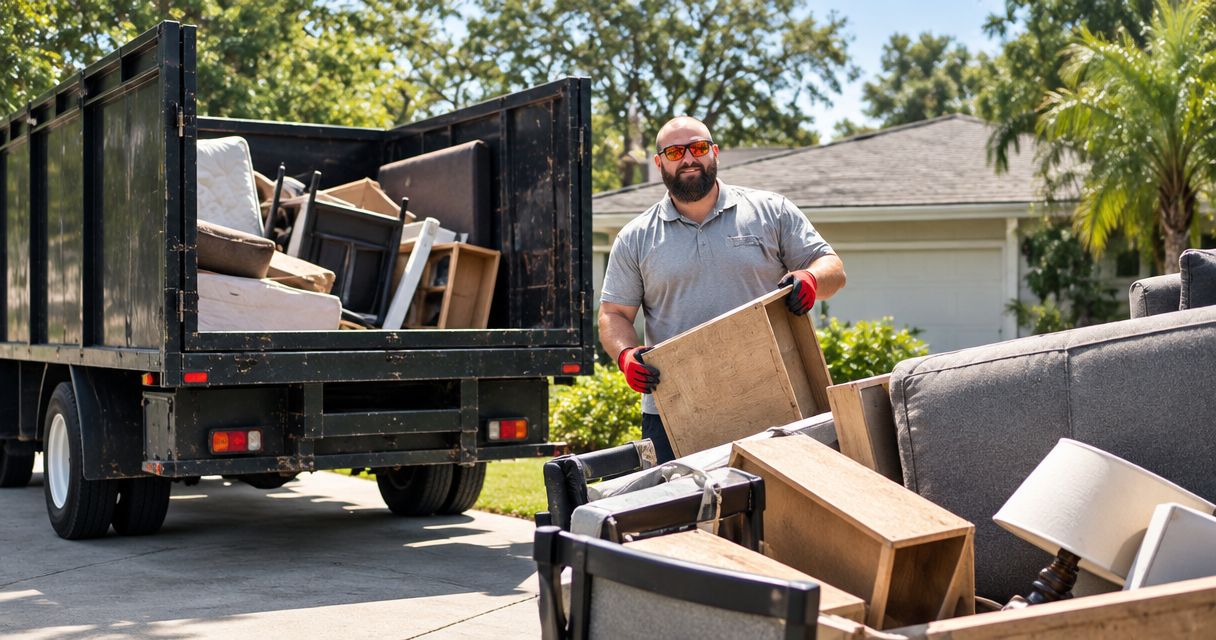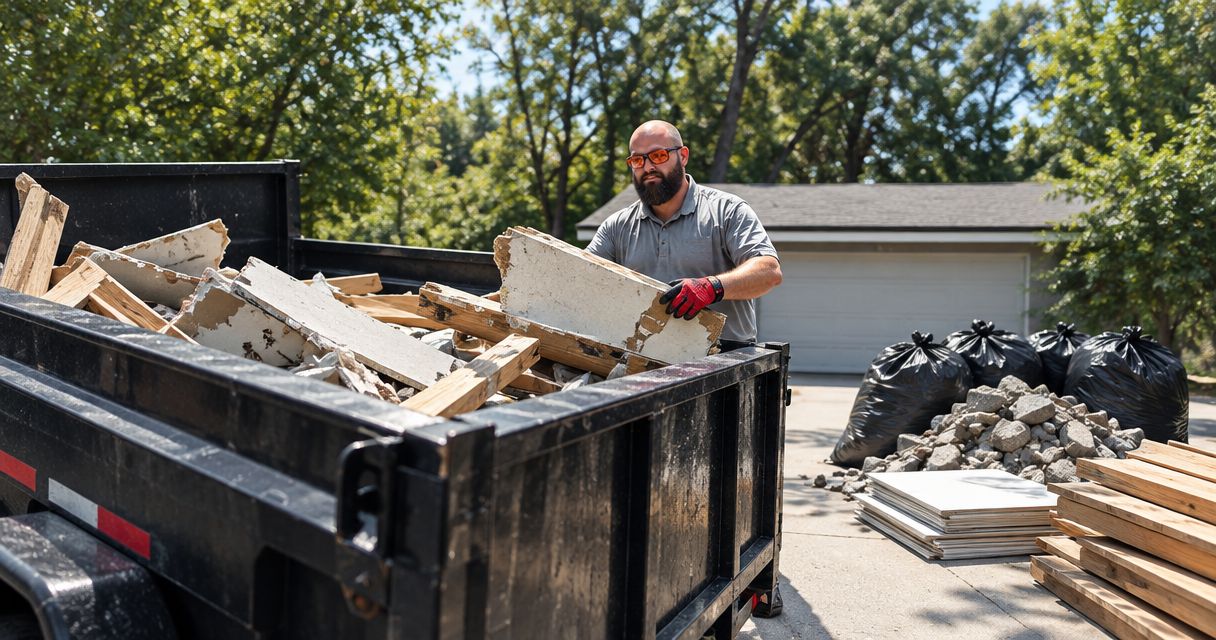
Prepare demolition debris for removal by identifying what needs to leave, separating it from anything you are keeping, and sending photos of the materials and pickup access before moving heavy pieces. Keep the route clear, flag sharp or potentially hazardous materials, and confirm what the removal service accepts before bagging, stacking, or carrying debris outside.
- For demolition debris removal, show the materials, pile size, pickup location, and access route before requesting a quote.
- HaulSet is a fit for local customers seeking construction and demolition debris removal.
- Keep demolition debris separate from furniture, belongings, and anything that needs special handling.
- Do not disturb suspected asbestos, unidentified chemicals, or unstable debris to prepare for pickup.
Why this matters
Good preparation gives the removal service a clearer picture of the job. A close-up of broken drywall does not show the stairs, narrow hallway, or separate pile behind the garage that also needs attention.
For customers in St. Petersburg, Largo, and Clearwater, the useful next step is to send HaulSet photos, the pickup location, and access details. Ask for a clear quote tied to that scope rather than assuming every material and handling task is included.
Show the whole job before you start rearranging it. Careful preparation means protecting the property and identifying obstacles, not doing risky lifting to make a pile look tidy.
How do you prepare demolition debris for removal?
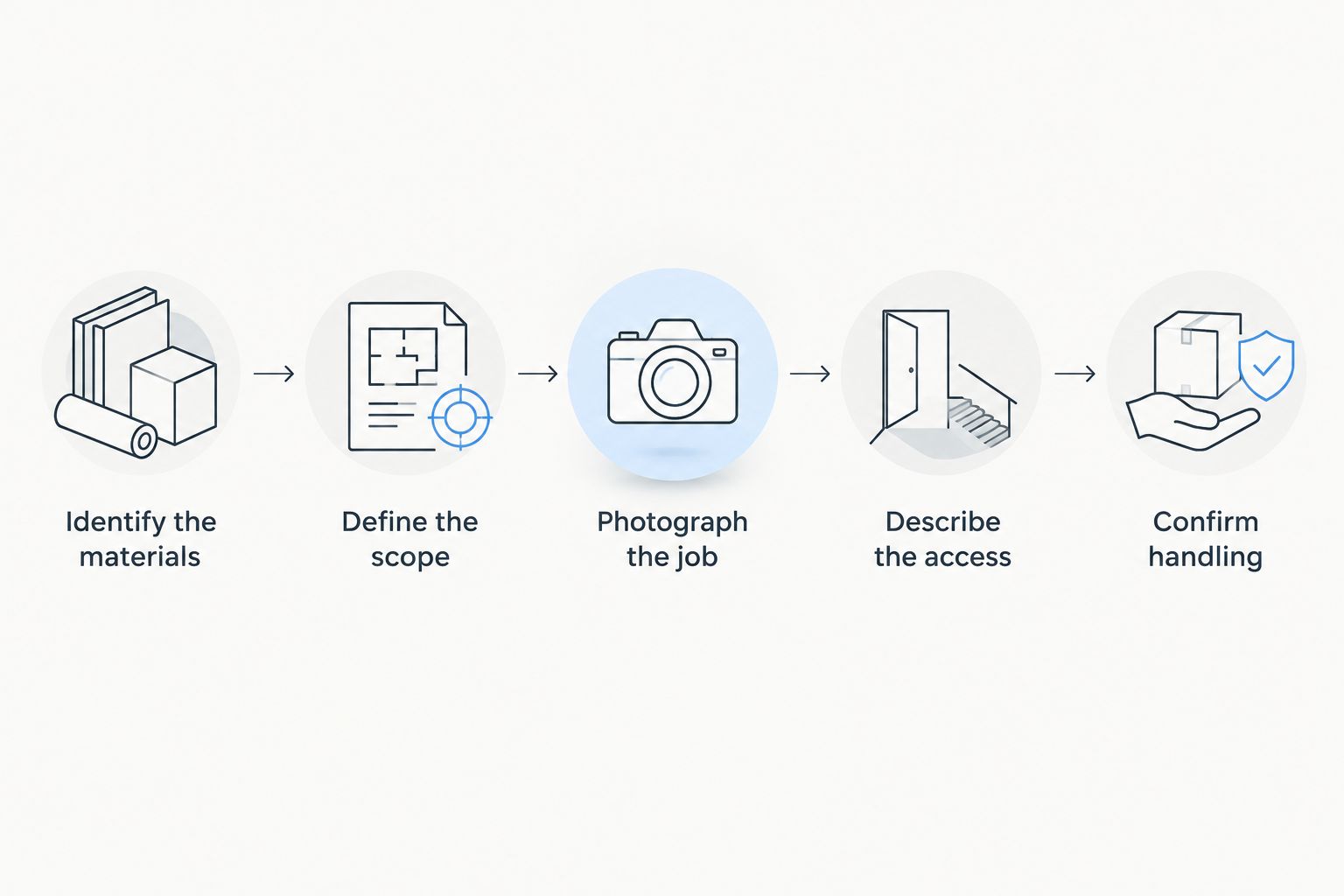
Use this sequence for a 2026 remodel cleanup or property cleanout. It works whether the debris is still inside the work area or already collected in a designated spot.
- Identify the materials. Describe what the project produced: wood, drywall, tile, concrete, fixtures, or mixed debris. Separate known materials from anything you cannot identify.
- Define the removal scope. Decide which piles, rooms, and outdoor areas belong in the request. Mark belongings, tools, and building materials that must stay.
- Photograph the job. Take wide views of the debris, close-ups of unusual materials, and views of the route from the work area to the loading location.
- Describe the access. Include stairs, gates, elevators, tight corners, parking restrictions, and the distance between the debris and the accessible loading area.
- Confirm handling before moving debris. Ask what can be collected, whether anything needs separate arrangements, and how the service wants the materials prepared.
For project-specific context, see construction debris removal for St. Petersburg remodels. Keep your own request focused on the actual materials and access at your property.
Start with an inventory, not a bigger pile
Walk through the work area without disturbing unstable materials. Note where each group of debris sits and whether someone needs to enter another room or building to reach it.
Use plain descriptions. Broken bathroom tile, wood trim with exposed nails, and a removed sink tell the service more than construction junk.
Do not combine everything just to simplify the photos. A mixed pile can hide sharp pieces and make it harder to see what needs collecting.
Decide what stays before anything leaves
Keep usable materials, personal belongings, and tools outside the removal area. If you cannot relocate them safely, label them clearly and point them out when discussing the job.
Include everyone who has a say in the property before finalizing the scope. A door, cabinet, or leftover flooring bundle should not enter the removal pile while someone is still deciding whether to keep it.
Should you leave debris loose, bag it, or separate it?
Confirm the preparation method before buying bags or moving heavy debris. Loose materials, small fragments, and bulky pieces present different handling issues; there is no single packaging method that suits every job.
| Preparation option | Best for | Useful feature | Limitation |
|---|---|---|---|
| Leave materials in place for assessment | Heavy, awkward, or uncertain debris | Avoids unnecessary handling before instructions | Requires clear photos and an accurate access description |
| Separate visible material groups | Debris you can organize without unsafe lifting | Makes the contents easier to describe | Does not establish that every material is accepted |
| Bag suitable small fragments after confirmation | Small debris the service agrees can be bagged | Keeps approved fragments together | Sharp pieces can puncture bags; dense materials become difficult to handle |
| Set aside bulky intact pieces | Fixtures or large components awaiting handling instructions | Shows their shape and access needs | Moving or dismantling them can create additional hazards |
Keep heavy materials recognizable
Concrete, masonry, and tile should be identified explicitly in the request. Do not describe a dense pile as a few bags without showing what the bags contain.
Avoid filling large containers simply because there is space left. Ask how dense debris should be handled, and do not lift a container you cannot control safely.
Do not hide sharp edges inside bags
Exposed nails, broken glass, and jagged metal need to be disclosed. A bag does not remove the hazard, and an opaque container prevents someone from seeing it before handling.
Ask for preparation instructions rather than improvising with thin bags or an unstable stack. Keep other people away from the area while those instructions are being settled.
What photos should you send for a demolition debris quote?
Send photos that answer three practical questions: what is leaving, where is it, and how will it get out? Keep the view wide enough to show context, then add detail where the contents are unclear.
- Whole pile: Show the full footprint and height without hiding the back of the pile.
- Material detail: Show recognizable pieces, especially dense, sharp, or unusual debris.
- Separate locations: Photograph every room, garage area, or outdoor pile included in the request.
- Exit route: Show doorways, turns, stairs, and gates between the debris and the loading area.
- Loading location: Show where a vehicle could approach, including visible obstructions or restrictions.
Use current photos. If demolition continues after you send them, explain that the final amount will change and send an update before confirming the scope.
Add a short written description
Photos cannot explain everything. Tell the service whether debris remains upstairs, whether a gate is locked, and whether a building manager controls access.
A useful message reads naturally: demolition debris from a bathroom remodel, inside the garage, with tile and drywall in separate areas. Then add the pickup location, access restrictions, and any materials you are unsure about.
Avoid calling the pile small or easy without showing it. Those descriptions do not explain its contents or the work required to reach it.
Request a debris removal quote
Send photos, your pickup location, material details, and the route from the debris to the loading area.
What details can change a demolition debris removal quote?
A useful quote needs a defined job. Discuss these details with HaulSet for demolition debris removal rather than assuming a photo of the main pile covers everything.
- Materials: Identify wood, drywall, tile, concrete, fixtures, and anything uncertain. Ask which materials the service accepts.
- Total scope: Include all piles and locations, not just the most visible area.
- Access: Describe stairs, tight passages, locked gates, and the route to the loading location.
- Preparation: Explain whether materials are loose, bagged, stacked, or still attached. Ask what preparation is required.
- Separate handling: Flag sharp objects, unidentified containers, and suspect building materials before anyone arrives.
- Site coordination: State parking restrictions, building access rules, and any arrangements controlled by another person.
Ask what the quote covers and what would require a revised scope. Also confirm whether any dismantling is included; hauling a detached item and removing an installed component are different tasks.
What should you keep out of the ordinary debris pile?
Keep unidentified chemicals, leaking containers, batteries, and suspected hazardous building materials separate from ordinary demolition waste. Do not open containers or disturb suspect material to get a better photograph.
If you suspect asbestos, stop disturbing the material and seek qualified guidance before arranging ordinary debris pickup. Appearance alone does not reliably establish whether a building material contains asbestos.
Painted demolition material also deserves care when lead is a concern. Avoid creating dust through sanding, cutting, or breaking material merely to make it easier to carry.
Keep dust and instability from becoming preparation tasks
Do not dry-sweep unknown demolition dust or break masonry into smaller pieces as a shortcut. Cutting and breaking some construction materials can create hazardous airborne dust.
Keep people away from leaning stacks and blocked passages. If the work area has an unresolved structural, electrical, or plumbing hazard, address that hazard with the appropriate qualified professional before planning the carry-out route.
How do you protect the pickup route?
Clear personal belongings from the intended route without moving unsafe debris yourself. Check the entire path, including the space beyond the exit door, rather than stopping at the nearest hallway.
Tell the service about delicate surfaces, narrow corners, and doors that do not open fully. Ask how the route should be prepared instead of laying loose coverings that can slip or obstruct movement.
Describe upstairs and shared-building access
For upstairs debris, explain the stairs and landing layout. Include tight turns, restricted doors, and anything that prevents a direct route outside.
For a shared building, check the access and loading rules with the responsible property contact. Do not assume a hallway, elevator, sidewalk, or shared parking area can be used for staging.
Keep the loading area available without creating a hazard
Do not move debris into a street, shared walkway, or parking space without confirming that placement is permitted. Leaving it inside an agreed area can be better than creating an obstruction outside.
Keep children and pets away from the debris and carry-out route. Secure loose belongings nearby so they cannot be mistaken for part of the pickup.
Do you need to move demolition debris to the curb?
Do not move demolition debris to the curb unless the service has agreed to that location and the placement is permitted. Send photos of its current location and ask whether moving it is necessary.
Curbside staging is not a substitute for confirming accepted materials. A pile outside can still contain items that require separate handling or arrangements.
Can furniture and demolition debris go in the same request?
Include furniture and demolition debris in the same inquiry, but describe and photograph them separately. A couch, mattress, and tile pile should not be presented as one unidentified load.
Ask whether the full mixed scope can be handled together. Keep household belongings away from sharp construction debris while you wait for instructions.
FAQ
How do I prepare demolition debris for removal?
Identify the materials, separate items that must stay, and send photos of the debris and access route. Confirm accepted materials and preparation instructions before bagging or moving heavy pieces.
Should I bag drywall before pickup?
Ask the removal service whether it wants drywall bagged before you start. Explain whether the debris includes sharp pieces, mixed materials, or suspect building materials that need separate assessment.
Can concrete and tile go in ordinary trash bags?
Do not assume ordinary trash bags are suitable for concrete and tile. Identify the materials in your request and ask for handling instructions before filling containers or attempting to lift them.
What should I send HaulSet for demolition debris removal?
Send HaulSet photos, the pickup location, material descriptions, and access details for demolition debris removal. Include every pile and disclose stairs, gates, parking restrictions, and uncertain materials.
Do I have to carry debris downstairs before requesting a quote?
Do not carry debris downstairs just to request a quote. Photograph its current location and describe the stairs, turns, and exit route so preparation can be discussed first.
What if I find suspected asbestos in the debris?
Stop disturbing suspected asbestos and seek qualified guidance before ordinary debris pickup. Do not break, sweep, or mix the material into the rest of the pile.
What if the debris pile changes after I request a quote?
Send updated photos and explain what changed before confirming the pickup scope. Identify any additional rooms, materials, or access work rather than relying on the original description.
One last thing
The most useful final photo is often the route, not another close-up of the debris. Stand near the pile and show the path toward the exit, then photograph any turn or obstacle the first view misses.
Before you submit the request, check that your photos and written description describe the same job. A clear scope is more useful than a tidier-looking pile.