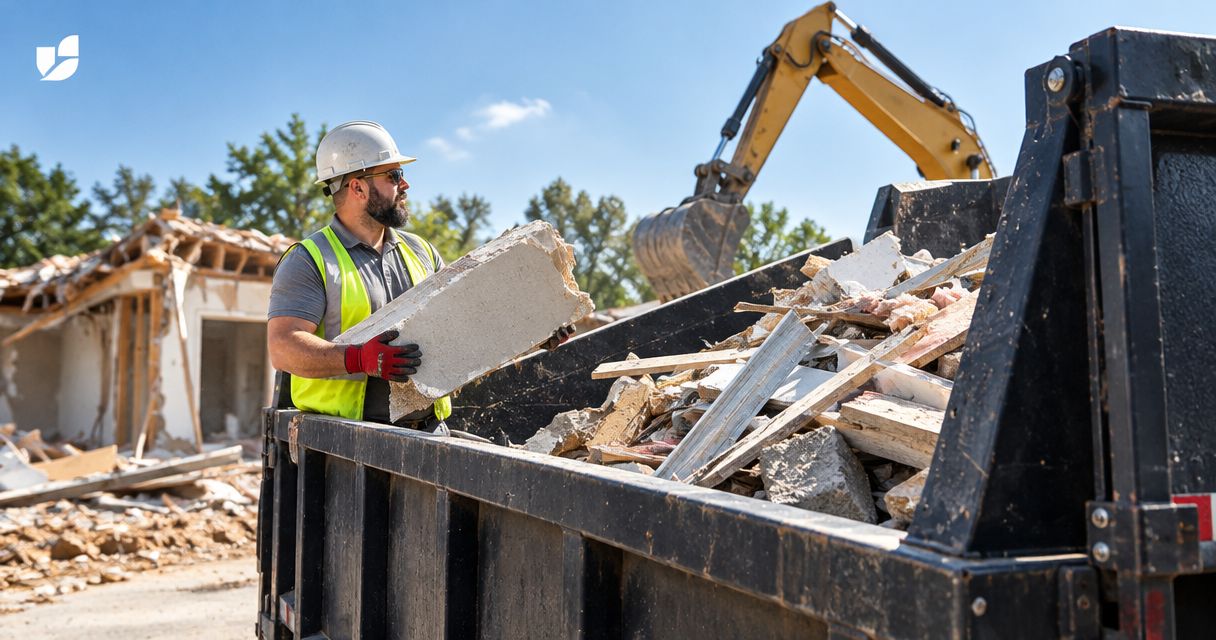
Construction debris removal costs depend on the material, the amount, loading conditions, pickup location and the work included in the quote. For a 2026 project, confirm whether the quote covers only debris already removed from the building or also includes any demolition, dismantling or additional handling.
- Construction debris removal quotes need material details, pile photos, pickup location and access information.
- Dense rubble and bulky renovation waste need different handling; pile size alone does not describe the job.
- HaulSet serves customers seeking construction and demolition debris removal; send photos before requesting a quote.
- Compare the same removal scope, not just the quoted total.
What affects construction debris removal costs?
The job is defined by what needs removing and how it gets from the property to the loading point. A photo of a pile helps, but it does not show an upstairs location, a narrow gate or everything hidden underneath.
Use this comparison to describe your debris. These are preparation categories, not a list of materials any particular company accepts.
| Debris description | Useful detail for the quote | Preparation advantage | Limitation to flag |
|---|---|---|---|
| Bulky pieces | Show cabinets, doors or other large pieces individually | Individual photos make the scope easier to describe | Large pieces need a suitable exit route |
| Dense rubble | Identify concrete, brick or tile rather than saying only “debris” | Naming the material explains what the pile contains | A compact pile does not mean light handling |
| Loose renovation waste | Show the whole pile and describe its contents | An overview establishes where the material sits | Small fragments can hide sharp edges |
| Mixed debris | List the different materials and photograph separate areas | An inventory distinguishes removal tasks | A surface photo does not show buried material |
For a local quote, send HaulSet your photos, pickup location and access details together. Include whether the property is in St. Petersburg, Largo, Clearwater or another service area, and identify the actual loading situation rather than just the city.
Why this matters
A useful 2026 quote gives you a defined job to approve. Without that definition, you cannot tell whether separate estimates cover the same debris, the same access conditions or the same work.
“Remove the renovation waste” leaves room for misunderstanding. “Remove the pictured debris from the ground-floor garage; keep the stacked flooring” tells the provider what belongs in the job and what stays.
Choose a clear removal scope before comparing quotes. That protects your decision from a simple mismatch: one estimate covering an accessible pile while another covers material scattered throughout the property.
Why construction debris removal quotes vary
The details below help a provider assess the job. They are questions to resolve, not a claim that every provider uses the same pricing method or applies a separate charge for each item.
- Material type: Name the waste you recognize, such as wood, drywall, tile or concrete. Flag unidentified material instead of guessing what it is.
- Amount and distribution: Show every pile, including debris behind doors, beside the building or in another room. A single close-up does not describe the full scope.
- Loading access: Describe stairs, elevators, narrow passages, gates and the route to the loading point. Explain any barriers before accepting a quote.
- Work included: Separate hauling existing debris from demolition, dismantling, moving retained items and cleaning up remaining fragments. Ask what the proposed job includes.
- Pickup location and site rules: Provide the address and any parking, loading or property-access restrictions. A city name alone leaves the actual pickup conditions unclear.
- Material acceptance and handling: Identify questionable containers, liquids and potentially hazardous materials separately. Confirm what the provider accepts rather than assuming everything can leave together.
The practical point is simple: make the difficult parts visible before the quote, not when loading begins. If the debris or access changes afterward, send an update and ask whether the original scope still applies.
How do I prepare an accurate quote request?
For your 2026 construction debris removal request, build a short record of the pile, its contents and the route out. You do not need a polished inventory; you need enough information to prevent important details from being missed.
Show the pile
Take an overview that shows the full area, then closer photos of bulky pieces and material that is hard to identify. Include separate piles rather than assuming the largest one represents everything.
Avoid photographing only the tidy side. If debris continues around a corner or behind stacked items, say so in your message and show it where you can do so safely.
Name the materials
Describe what the work produced: removed flooring, broken tile, drywall, wood offcuts or another identifiable material. Use plain terms and distinguish known contents from anything uncertain.
Do not break apart, open or disturb questionable material just to improve the description. Tell the provider what you can see and ask what information is needed before handling it.
Show the route
Photograph the path from the debris to the proposed loading area. Mention the floor, stairs, doorway restrictions and any place where a large piece cannot pass intact.
If a gate is locked or a building controls loading access, explain how entry is arranged. Do not assume a clear driveway means the entire carry route is straightforward.
State the scope
Say exactly what should leave and what must stay. Include whether the debris is already detached, whether other work is still producing waste and whether you want anything beyond removal discussed.
For a practical packing and staging checklist, see how to prepare demolition debris for removal. Preparation should clarify the job without creating extra lifting or unsafe handling for you.

What should my quote request say?
Send a message that a provider can understand without guessing. Start with the pickup location, identify the debris and describe the access; attach photos that match your description.
A useful message reads like this: Please quote removal of the pictured renovation debris from my property in Clearwater. The material is in the garage, the driveway is the proposed loading area, and the items marked to keep are not part of the job.
Adapt that wording to your actual property. If the debris is upstairs in St. Petersburg or behind a gate in Largo, put that detail in the message instead of saving it for a later conversation.
HaulSet is best for local customers seeking a construction debris removal quote based on photos, location and access details. Ask for a clear scope and explain any handling concerns so Gio can discuss the work with you.
Request your debris removal quote
Send debris photos, your pickup location and access details so the removal scope is clear.
Is hauling debris the same as demolition?
Hauling debris and performing demolition are different scopes of work. Removing a detached cabinet is not the same task as disconnecting or dismantling one that remains installed.
For your 2026 project, say whether the material is already loose and ready for removal. If something remains attached to the building, identify it and ask whether that work belongs in the proposed service.
The same distinction applies to site cleanup. Ask whether the quote addresses the pictured pile only or also includes collecting loose fragments from the surrounding area; do not assume a particular finish standard.
Does moving debris outside make removal cheaper?
Moving debris outside does not establish a lower quote by itself. An accessible pile changes the loading situation, but the provider still needs to assess its contents, amount and removal requirements.
Ask where to stage debris before moving it. Carrying heavy or sharp material yourself can create unnecessary handling, and placing it outside can obstruct a walkway, driveway or shared access.
If the pile is already safely contained indoors, send photos first. Describe the route and let the quote discussion establish whether moving anything beforehand is useful.
How do I compare construction debris removal quotes?
Compare your 2026 quotes against the same written description and photos. A total means little if one provider assessed the garage pile and another assessed the garage, side yard and upstairs room.
Check the proposed work against this list:
- Included debris: Does the scope identify every pile and the material you described?
- Access assumptions: Does it account for the actual floor, carry route and loading area?
- Extra work: Are dismantling, demolition or moving other belongings included, excluded or still unresolved?
- Acceptance limits: Has the provider confirmed what can be removed and what needs a different arrangement?
- Finish point: Is it clear what the area should look like when the agreed work is complete?
- Scope changes: Do you know whom to contact if more debris appears before pickup?
A detailed quote request has a practical advantage: it gives you a consistent basis for deciding. Its limitation is that photos do not reveal every condition, so disclose anything the images leave out.
With HaulSet construction debris removal, use the quote conversation to confirm your specific job. Do not treat an article, a general service description or another property's removal as approval of your materials and access conditions.
FAQ
How much does construction debris removal cost in St. Petersburg?
A construction debris removal quote in St. Petersburg needs the material description, amount, pickup location and access conditions. Send photos of every pile and confirm the work included before comparing quotes.
Can I get a construction debris removal quote from photos?
Photos help describe a construction debris removal job, but they need location and access details alongside them. Include anything the pictures do not show, such as stairs, hidden debris or restricted loading access.
Does a small pile of concrete count as a small removal job?
A small concrete pile does not describe the full handling requirement. Identify the material clearly and show its location rather than relying on the pile's footprint alone.
Should I bag construction debris before pickup?
Ask the removal provider how to prepare your particular debris before bagging it. Bags conceal contents, so describe what is inside and flag sharp, heavy or unidentified material.
Can construction debris go with garage cleanout junk?
Ask whether the provider accepts all the materials in your combined job. Photograph renovation waste separately from household belongings so the quote distinguishes the different removal tasks.
What should I send for a debris pickup quote in Largo or Clearwater?
Send debris photos, the pickup address and access details for a Largo or Clearwater quote. Describe what must leave, what stays and whether the waste is already detached and ready for removal.
What if I add more debris after requesting a quote?
Send updated photos and describe the added debris before pickup. Ask the provider to confirm whether the existing quote still covers the changed scope.
One last thing
Photograph what must stay, not just what must leave. Renovation spaces often contain retained fixtures, spare materials and tools beside the waste; identify those boundaries clearly rather than expecting someone else to infer them.
Before approving your 2026 removal quote, read your own message as if you had never seen the property. If it does not explain the debris, the route and the keep items, add that information before the job is agreed.